Tuesday, December 20, 2022

HAZARDOUS WASTE


Did you know that more than 400 million tons of hazardous wastes are produced globally each year?

What Can Be Considered Hazardous Waste?

When the term hazardous waste is used, it refers to substances and products that have hazardous properties and can have a negative impact on people or the environment.

Hazardous waste is generated from many sources ranging from industrial manufacturing process wastes to batteries; which include raw materials, finished and intermediate goods, waste items, leaks, unintentional spills, and much more. Waste oil, solvents, acids, alkalis, toxic paint wastes, nitrates, pesticides, and sludge are some of the most typical hazardous wastes.

These wastes frequently possess one or more of the hazardous characteristics such as ignitability, reactivity, corrosivity, or toxicity. Thererefore it is vital to dispose of hazardous wastes safely, protect the environment and keep your home safe.

Get More Info :  HAZARDOUS WASTE

Thursday, November 24, 2022

Light Bulb Recycling


Light bulbs after it’s life-period are usually thrown away and not recycled, which then ends up in landfills where the chemicals contained within these may leach to the soil and groundwater affecting the environment. There are many types of light bulbs that can be recycled; the raw materials can be recovered and reused. Using recovered materials takes up less energy than it does to produce items with raw material and helps from further mineral mining.

Here are some of the types of light bulbs (and it’s parts) that can be recycled:

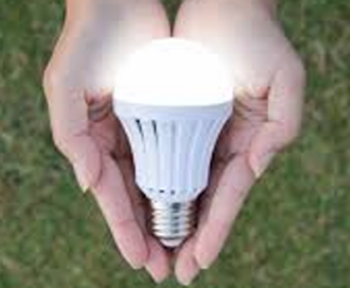
Light-Emitting Diode or LED Light Bulbs

LED lights are the most environmentally friendly light bulbs in the market because of their extended lifespan, lack of dangerous chemicals, and based on its energy efficiency rate. LED lights do not contain toxic elements. However, it is made of electronic components such as Diodes, semiconductors, or transformers which could be recycled. LEDs are made of glass (88%), some metals (5%) and other different materials (7%). Some metals contained in LEDs are useful for recycling such as indium, gallium, or some rare-earth element (REE) that you can find in the crust. It’s better to avoid those lights to make their way to landfills.

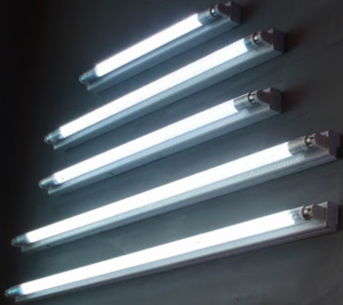
Fluorescent Lamps

Fluorescent lights are more energy efficient than the incandescent lights. Recycling for Fluorescent lights is crucial, otherwise the mercury and phosphorus content can spill to the environment when disposed of in landfills.

Recycling helps in separating mercury, phosphorus powder, glass, and metals and the same can be reused in new fluorescent lamps.


Compact Fluorescent Light or CFLs

Compact fluorescent light bulbs or CFLs, are more energy-efficient than some other types of bulbs but also contain mercury, which is toxic to the surroundings. Therefore, these should not be disposed in the landfills and need to be recycled by separating glass, metals and other materials such as mercury which can be reused to make new products or light bulbs.

Recycling CFLs not only keeps trash out of landfills but also stops the discharge of hazardous mercury into the environment.


Get More Info :  Light Bulb Recycling

Sunday, November 13, 2022

Recycle today to reserve resources for our future


What is Recycling?

Recycling is a sustainable and eco-friendly method of reusing resources and raising product quality. By substituting raw material inputs and rerouting waste outputs outside of the economic system, it seeks to promote environmental sustainability.

Why should we Recycle?

Recycling helps in reducing the volume of solid waste dumped in landfills, freeing up space for the trash that cannot be recycled and conserving the resources.

According to Gulf Business, an average resident in the UAE generates nearly 3kg of waste every day, which is among the highest amounts per capita in the world.

If we do not recycle waste, it ends up in the landfills and it takes hundreds of years for the dumped materials to degrade. Many materials like glass, never decomposes and remains in the landfills forever. The world is already overpopulated and eventually we may run out of space.

Many useful materials that can be recycled and converted as raw material for a new product ends up in landfills if we don’t recycle. By recycling, we are also reusing the energy and resources they hold and is giving a second chance instead of ending up in landfills. Natural resources are not infinite, recycling protects the resources.

How does Recycling Help the Environment?

Recycling not only limits the release of waste to the surrounding but also lowers the emission of greenhouse gases, water pollutants and, it can even conserve energy. Reusing the recovered material to produce new products will lower the waste generation.

Buying recycled material is safe for the environment as it limits our reliance on natural resource for the need of virgin raw materials.

How Does Recycling Reduce Emissions and Waste Products?

Producing goods from recycled materials requires less energy than producing goods from virgin materials, which results in a reduction in the burning of fossil fuels and the release of greenhouse gases (GHGs) that contribute to climate change. Also, using recycled materials to make new products will reduce the need of virgin materials and thereby reduces the amount of waste materials entering the landfill. As a result, more products may be supplied because it reduces the expenses associated with manufacturing. Consumers benefit from the cheaper goods as a result, and producers continue to produce a larger quantity.

Get More Info :  Waste Management services | What is Recycling?

Monday, June 20, 2022

Yes Full Circle- Metal Recycling


Materials made of plastic are light, durable, and relatively inexpensive. Various products can be easily manufactured from them and used in a variety of ways. Recyclable plastics include Polyethylene Terephthalate (PET), High-Density Polyethylene (HDPE), Polypropylene (PP), Polyvinyl Chloride (PVC), Low-Density Polyethylene (LDPE), Polystyrene (PS).

More Info : Plastic Recycling

Thursday, May 26, 2022

Secure Product Destruction And Recycling | YES Full Circle

 Everyone knows the importance of a good brand image. To put it simply, if the company has a good brand image, customers will feel comfortable about doing business with that company resulting in more cash flow and better equity. The better the brand image is, the more chances people are going to view it as the preferred company to interact with. A positive image gives the customers the belief that the company is trustworthy and they can count on it in the future as well. If done well enough, the company might even have a surge of influencers and advocates. Look at Pinterest for example, the company has such a strong brand image that it basically recycles user made content to market itself.

Only a handful of companies can claim to have that perfect positive image. We know that if there was a listing, the companies with negative brand perceptions would outweigh those with positive brand perceptions by a landslide. You might have heard the quote, “It takes only a second to turn a positive image into a negative one but a lifetime to turn it around”. This is entirely true. If a customer decides to eat at a restaurant and loves the food so much that he tries it for the next 12 weeks with the same outcome, we can say that he had a positive image of the brand. But what if on the 13th visit, he got served distasteful food? This would lead to a negative image and chances are, he would never eat there again. That is how powerful human perception can be.

Moving on to the biggest cause of negative brand image in the modern day, it is environmental pollution. One bad review for bad food served to one customer can only take you so far but imagine your company polluted the earth that every single human being lives on. That would be devastating for the brand. Major multinational companies that are amongst the top revenue generators in the world are some of the biggest sources of plastic pollution as well. The majority of customers who see the effect of irresponsible plastic disposal at the hands of these companies show their displeasure by sharing posts online, protesting in front of their offices and worst of all, boycotting their products resulting in losses. In the past, some companies have even considered a redesign after the backlash. Yet this might not be enough. This is where a proper waste management and recycling strategy needs to be implemented.


Secure Product Destruction And Recycling | YES Full Circle

Thursday, May 12, 2022

Waste Management in UAE


It is estimated that the UAE produces over 2.5 million tonnes of waste every day, with much of this coming from construction and demolition sites. In order to combat this growing problem, the UAE has implemented a number of initiatives aimed at increasing recycling rates. These include programs that offer incentives for residents to recycle their waste, as well as laws that mandate the recycling of certain materials.

One of the most successful waste management programs in the UAE is the waste segregation campaign. This campaign encourages residents to separate their waste into different categories, such as paper, plastic, metal, and glass. Once the waste has been segregated, it can then be taken to a recycling facility where it will be processed and turned into new products.

The waste segregation campaign has been so successful that it has helped to increase recycling rates in the UAE by more than 20%. In addition to this, a number of other initiatives have also been put in place in order to further increase recycling rates.

More Info :  Waste Management in UAE

Monday, May 2, 2022

End Waste Now | Recycling Services in Dubai - yesfullcircle

What does End Waste Now do?

EWN works with both private and public sector organizations to:

  1. Implement waste reduction strategies
  2. Implement circular economy solutions to maximize the use of waste as a resource back into the circular economy

This is done through consulting, project management, and providing innovative technological solutions. 

What is End Waste Now?

End Waste Now is a division of YES Full Circle.

We believe in reducing waste generations rates, and where waste has to be produced, to convert into a useful resource for a circular economy. 

What are the benefits of implementing End Waste Now Program?

  • Waste reduction translates into reduced costs for organizations and municipalities.
  • These reduced costs can be translated into better profit margins and/or additional funds released for other government programs.
  • Positive community and brand image for stakeholders who participate.
  • Helps to promote acceptance of waste as being a resource that can be reused.
  • This is done by understanding how to modify the waste generation process so the outputs can be used as inputs in a circular economy, compared to the current linear model.

More info :   End Waste Now | Recycling Services in Dubai - yesfullcircle


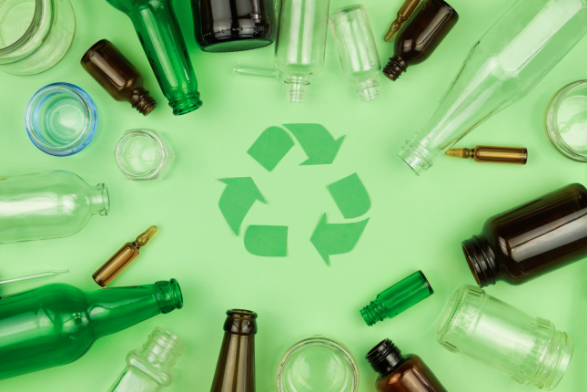
GLASS – Possible to recycle Infinitely| Innovative Circular Economy Solutions in Dubai

  Glass is a non-crystalline, often transparent, amorphous solid that has widespread practical, technological, and decorative application. G...