Monday, April 1, 2024

How is e-waste recycled- yesfullcircle


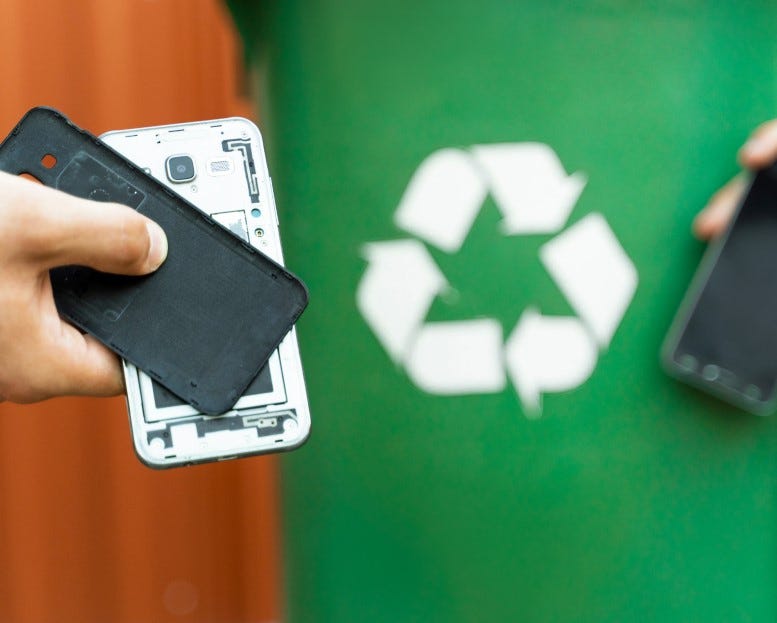
E-waste has become the fastest-growing waste stream in the world as the availability and usage of electronics increases across the globe. Globally, more than 50 million metric tons of e-waste is generated every year.

What is E-waste?

E-waste refers to any electronic devices that have reached the end of life. Think about your daily electronics you cannot live without — smartphones, tablets and laptops. Recycling e-waste allows for the recovery of materials such as gold, copper, glass, aluminium, lithium, plastic, and more.

How is e-waste recycled?

It can be recycled using a variety of methods depending on the type of electronic device and the materials it contains. Here are some common methods for e-waste recycling:

1. Dismantling and sorting: E-waste is first dismantled by hand or machines, and then sorted into different types of materials such as plastic, glass, metal, and circuit boards.

2. Shredding and grinding: The sorted materials are then shredded or ground into smaller pieces to make them easier to process.

3. Magnetic separation: Magnets are used to separate ferrous materials such as iron and steel from non-ferrous materials such as aluminium and copper.

4. Chemical treatment: Chemicals are used to dissolve and separate metals from other materials in the e-waste.

5. Pyrometallurgical processing: This involves melting down the e-waste to recover metals such as gold, silver, and copper.

6. Hydrometallurgical processing: This involves using a chemical solution to dissolve metals from e-waste.

After the recycling process, the recovered materials can be used to make new electronic devices or other products. Proper e-waste recycling helps to reduce the environmental impact of electronic waste and conserve natural resources.

YES Full Circle is a full-service environmental service company, offering innovative and sustainable solutions. We offer secure destruction, treatment and recycling of e-waste, metal, cartridges, plastic, papers and specialized waste.

Read More : Waste Recycling Services in Dubai.

Visit us : Specialized Waste Recycling, Recycling in Dubai.

Friday, March 29, 2024

Shocking Ocean Plastic Statistics: A Threat to Marine life, Ocean & Humanity


The ocean is said to be Earth’s life support, with 97% of the world’s water held by the oceans. We rely on it to regulate our climate, absorb CO2 and oceans are the number one source of protein for over a billion people.

However, at the rate we are polluting the oceans, the damage we are doing to the marine life and ecosystem is becoming irreparable. It is estimated that 12.7 million tonnes of plastic ends up in oceans annually. Our actions over the 10 years will determine the state of the ocean for the next 10,000 years to come. (Source: condorferries.co.uk)

Here are some staggering plastic pollution on our ocean statitstics:

  • The world produces 381 million tonnes of plastic waste yearly — this is set to double by 2034. 50% of this is single-use plastic & only 9% has ever been recycled.
  • More than 1 million plastic bags end up in the trash every minute.
  • 1 in 3 fish caught for human consumption contains plastic.
  • More than 1 million seabirds and 100,000 marine animals die from plastic pollution every year.
  • There is now 5.25 trillion macro and micro pieces of plastic in our ocean & 46,000 pieces in every square mile of ocean, weighing up to 269,000 tonnes.
  • The Great Pacific Garbage Patch is around 1.6 million square kilometers — bigger than Texas.

Visit US : Producer Responsibility Organizations.

Read More : textile recycling companies.

Thursday, February 15, 2024

Plastic Recycling Solutions in Dubai


From the 8.3 billion metric tonnes of plastics produced, 6.3 billion metric tonnes are disposed of as waste, and only 9% is recycled. Plastic has also become an integral part of life on a day to day basis. Getting rid of plastic has become an increasingly challenging task. Plastic recycling consists of several processes through which plastic waste is collected and converted back into new raw materials, instead of being simply disposed of.

Materials made of plastic are light, durable, and relatively inexpensive. Various products can be easily manufactured from them and used in a variety of ways. Recyclable plastics include Polyethylene Terephthalate (PET), High-Density Polyethylene (HDPE), Polypropylene (PP), Polyvinyl Chloride (PVC), Low-Density Polyethylene (LDPE), Polystyrene (PS).


Get to Know the more solutions: Click Here 


Contact Us: Plastic Recycling solutions in Dubai 


Sunday, February 11, 2024

A Secure Option for CSR Managers and Local Marketing Executives | White-Labelled CSR Solutions


We help businesses jump start their Corporate Social Responsibility (CSR) Program!

Nowadays, many companies have a solid focus on their Corporate Social Responsibility to make sure that their contribution to the environment goes beyond the CSR manual. Many companies need to demonstrate their commitment to the environment but it is difficult to build cost-effective campaign infrastructure to track and calculate outcomes.

Don’t worry, YES uses its established drop-off and pick-up locations infrastructure to foster awareness of your company’s dedication to the environment. Our multimedia and monitoring tools will help you prove your next campaign’s ROI.

YES White-labelled CSR solutions Marketing Campaigns

* Customized programs to demonstrate your commitment to sustainability.

* We collect and recycle the products your customers buy from you.

Want to talk? Let's do it!
Get to know the complete Information: Click Here


Want to talk? Let's do it!


Monday, February 5, 2024

Transforming Textile Waste: Understanding Textile Waste Recycling

 In an era of burgeoning consumerism, the textile industry contributes significantly to global waste accumulation. Places that are known for their fashion prowess, encounter a parallel surge in textile waste, prompting a crucial need for sustainable waste management solutions.

Understanding Textile Waste Recycling

Textile waste encompasses a wide array of discarded materials, from old garments to manufacturing leftovers. Its disposal poses environmental challenges, driving the need for efficient recycling strategies. Textile Waste Recycling Services aim to curb this impact by repurposing waste into valuable resources.

The Environmental Impact

Dubai’s vibrant fashion scene churns out a substantial volume of textile waste, straining landfills and impacting the environment. Textile waste in these landfills contributes to soil and water pollution, accentuating the need for responsible waste management practices.

Benefits of Textile Waste Recycling

Implementing recycling strategies for textile waste brings multifaceted advantages:

  1. Environmental Conservation: By diverting textile waste from landfills, we mitigate environmental degradation, preserving natural resources.

  2. Circular Economy Promotion: Recycling transforms discarded textiles into usable materials, fostering a circular economy that minimises waste.

  3. Sustainable Industry Practices: Embracing textile waste recycling encourages sustainable practices within the fashion and textile industry.

  4. Community Impact: Engaging in responsible recycling initiatives positively influences community perceptions and sustainability awareness.

More info : Textile Waste Recycling Services Dubai

Tuesday, January 30, 2024

E-Waste Recycling | E-waste Recycling Service in Dubai


According to a UN study, about 50 million tonnes of electronic waste were disposed of worldwide. E-waste or electronic waste recycling is the process of recovery material from old devices to useful new products. Most of these electronic products end up in landfills, and only 20% of e-waste is recycled. E-waste should be properly disposed of as it contains various toxic and hazardous chemicals and materials that are released into the environment. In addition to the rise in the use and purchase of electronic items such as smartphones and laptops, e-waste has also risen.

Recycling old and damaged electronics can reduce the need to mine metals and it will reduce greenhouse gas emissions since old devices have been re-used for producing new ones. TVs, laptops, PCs, video consoles, cables, wires, smartwatches, remote controls, and mobile phones can all be recycled for metals such as copper, tin, iron, aluminium, carbon, titanium, gold, and silver. There are many materials used in making these electronic devices that can be recovered, reused, and recycle.

 More info :  E-Waste Recycling | E-waste Recycling Service in Dubai

Monday, January 22, 2024

Tips To Recycle Your Cosmetics & Beauty Products | Cosmetics Recycling Service in Dubai


120 billion units of packaging are produced every year by the global cosmetics industry. Of these, very few plastic waste items generated in the bathroom are accepted by most public kerbside recycling programmes. Most common beauty products and packaging contribute to the world’s growing plastic waste problem and, without adequate recovery solutions, are tracked for landfills, burned, buried, or simply littered where waste management is insufficient. Many plastic waste items find their way into oceans and waterways, compounding the problem with environmental hazards.”

The Sustainable Beauty Coalition has always championed cleaning up beauty’s packaging act. On the topic, Jayn Sterland, Chair of the organisation, says, “I do strongly believe that this needs to be a two way street, a partnership between brand and consumer to jointly do the right thing by the planet. As consumers, we need to make sure we discard products in a way that doesn’t add to the current environmental problem.”

Read the complete information : Click Here

Contact Us : Cosmetics Recycling Service in Dubai


GLASS – Possible to recycle Infinitely| Innovative Circular Economy Solutions in Dubai

  Glass is a non-crystalline, often transparent, amorphous solid that has widespread practical, technological, and decorative application. G...